


Pro Rock Climber Admits Her ‘Femininity’ Wasn’t ‘Received Openly’ in the ‘Male-Dominated Sport,’ but She’s Hoping to Change That (Exclusive)
Pro Rock Climber Admits Her ‘Femininity’ Wasn’t ‘Received Openly’ in the ‘Male-Dominated Sport,’ but She’s Hoping to Change That (Exclusive)

Meredith WilshereSat, November 14, 2026 at 9:00 PM UTC
0
Sasha DiGiulianCredit: Courtesy of Sasha DiGiulian -
Sasha DiGiulian won a junior regional championship at age 7 and later became a world champion climber
She returned to challenging climbs after hip reconstruction surgeries between 2020 and 2022
DiGiulian hopes her authentic approach encourages more women and girls to pursue climbing
Sasha DiGiulian first set foot in a climbing gym almost by accident.
At 6 years old, DiGiulian fell in love with the sport after going to her brother’s birthday party at a climbing gym. While the now-34-year-old admits her “family didn’t really know anything about climbing competitions,” that didn’t stop her from following her passion.
“I joined the local junior team, which was essentially just a group of kids that met each Wednesday and Saturday for a junior team practice. I started going to that for the first year,” the professional athlete and world champion climber tells PEOPLE.
When she was 7, she took part in a junior regional championship in the 11-and-under category — and won. There, DiGiulian met Claudiu Vidulescu, who ran a competitive team program, and he took her under his wing.
“I started training with him, going to the climbing gym with a more sport-focused approach rather than it just being my hobby,” she says. “At 11, I won my first junior continental championship in Mexico City. Then I had my first sponsor, which I say lightly. It’s an endorsement deal, but it was a free product and some competitive financial support to get to where I was going.”
She then went on to compete on the US national team, winning national championships and the Pan American Games. At 18, she won the women’s overall world championship title, before transitioning from indoor climbing to outdoor climbing.
Sasha DiGiulianCredit: Courtesy of Sasha DiGiulian
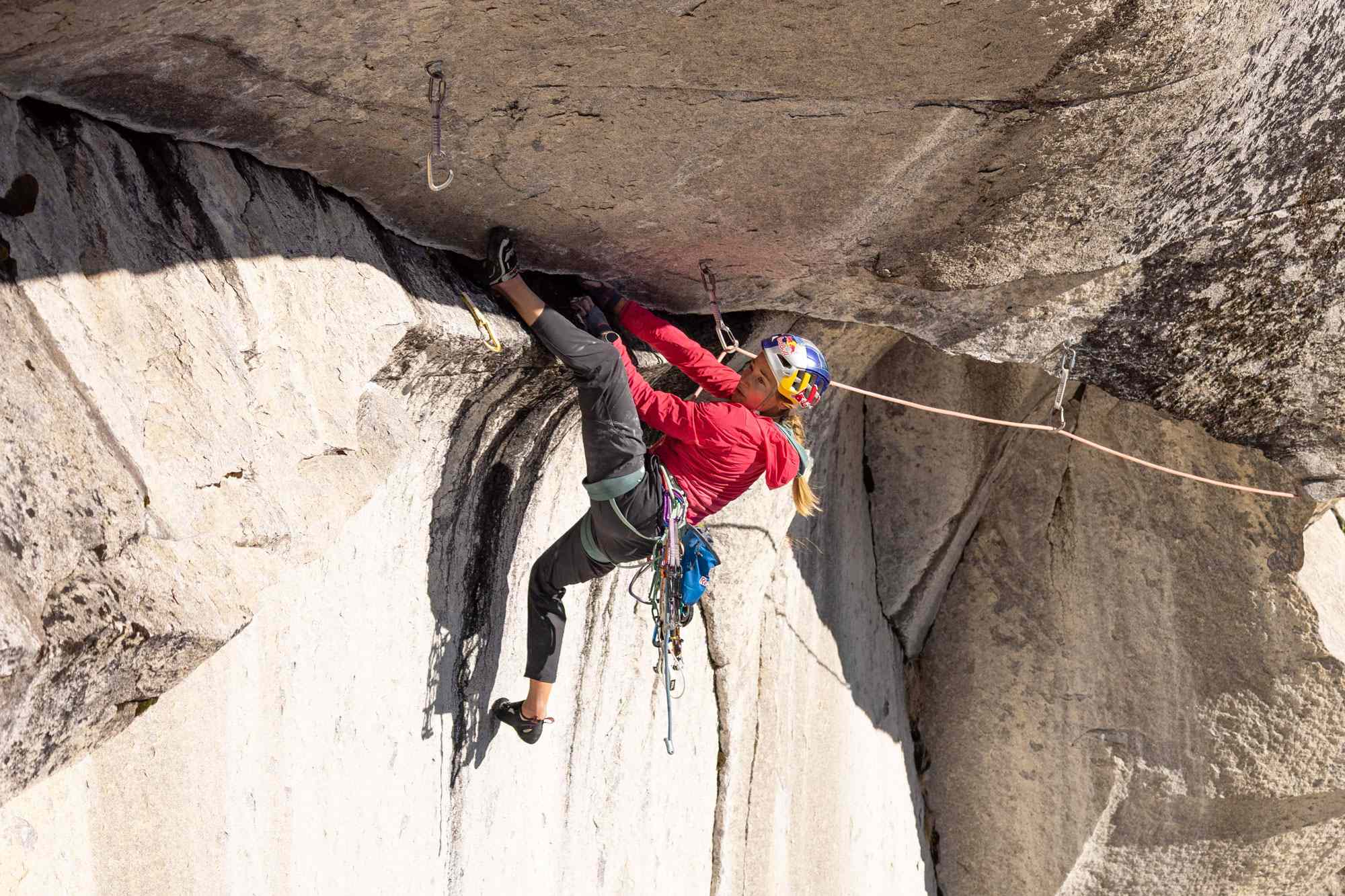
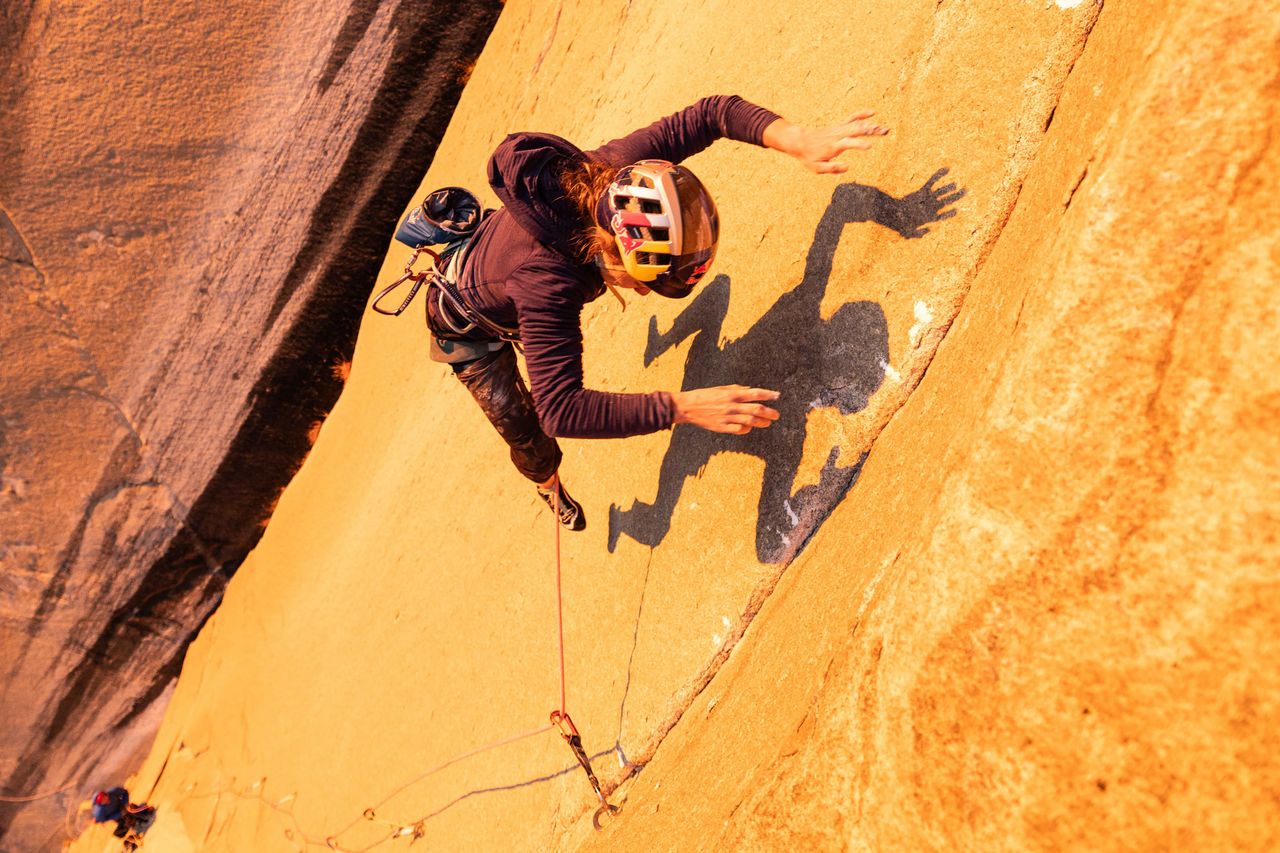
“After winning the world championship, I pivoted my career to really focus on going and trying to do really challenging rock climbs in the outdoor space. I went and became the first North American woman to climb what was called a 514D. And in the European grade system, it’s called a 9A,” DiGiulian shares.
She explains that “everything in climbing is a grade scale.”
“As you go up numerically on the grade scale, it means that the climb is more challenging. So that can mean that the angle of the wall is more challenging than the quality of holds that you’re hanging onto. Could be a 6-millimeter little edge protruding from the side of the rock, which is a credit card-size protrusion. The difficulty of the movement is scaled off of that,” she explains.
“Then I linearly went from outdoor single pitch sport climbing to getting more into what’s called big wall free climbing,” she adds.
Free climbing is when you ascend a mountain face using only your hands, feet and physical strength, but still have a rope and other gear for protection. Free soloing, on the other hand, involves no equipment at all, but DiGiulian says “very few climbers actually do [free solo], because the risk is so high.”
She shares that “it’s a sport that’s full of complexities,” and when deciding what she wants to climb, she looks for “really challenging cliff faces around the world and go out to try and climb, and in some cases, be the first woman to climb that specific route up a cliff, or do a first descent.”
However, between 2020 and 2022, DiGiulian underwent a series of surgeries and hip reconstruction due to congenital hip dysplasia, which “shredded through the labrums on both sides of my hips.”
The surgery required shaving her femur bone back to “make a more stable socket within my hip joint, and then sewed and screwed it back together with metal screws to reconstruct it.”
However, DiGiulian says she “actually went on a climb five weeks after my last surgery.”
“In retrospect, I feel like I went back way too soon. I was just so concerned about whether I’d be able to come back and climb; it was almost like mentally just trying to prove to myself that I was back. I survived. It worked out,” she admits. “But I was really back to climbing challenging walls in the fall of 2022. I went to Spain on an expedition to climb this climb called Rayu, which was like the hardest big wall achieved by a woman. I went on in like an all-female expedition, which was really empowering.”
Advertisement
Sasha DiGiulianCredit: Courtesy of Sasha DiGiulian
DiGiulian knows that “climbing is a very traditionally male-dominated sport,” but takes pride in adding diversity to the space.
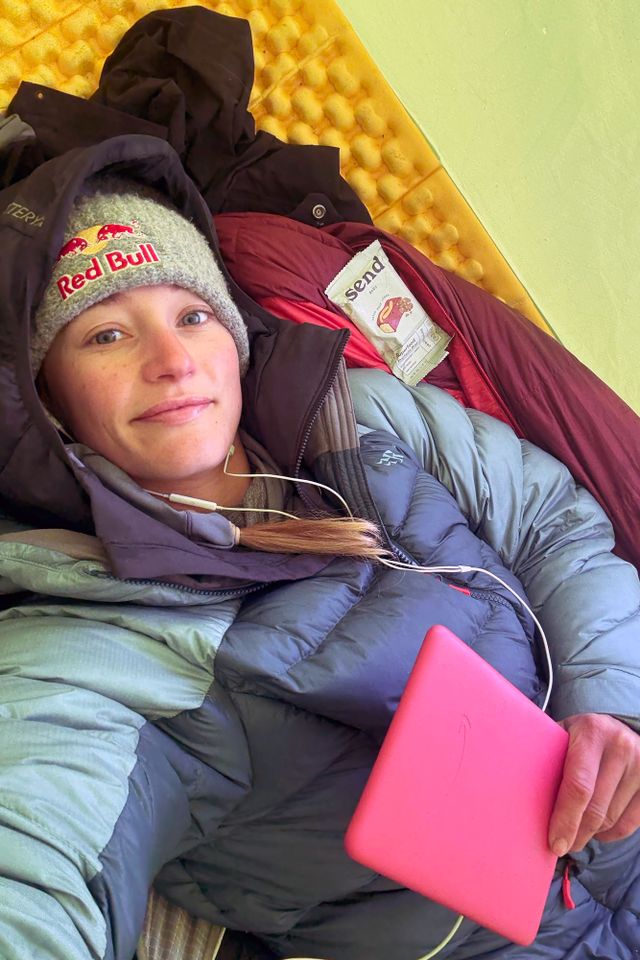
“I came into the sport as a girl from a city who got her start in competition climbing and entered the outdoor climbing space unapologetically wearing pink and painting my nails and trying to represent both sides of who I am,” she tells PEOPLE. “Femininity didn’t have a place in the sport at the time, as well as coming into the sport with more corporate sponsors. At 17, I had signed with Adidas and Red Bull. Red Bull’s still my title sponsor and I’m really supportive of my career. It was shape-shifting the perception of what it looked like to be a professional climber.”
She shares that there is a lot of “gatekeeping that exists within the sport and looking the part. I never really looked the part of a traditional professional climber.”
However, DiGiulian says “that perception is changing as the sport’s grown,” and they’ve “societally moved more into a space of seeing that you can live within the dualities of who you are and be feminine and be a badass.”
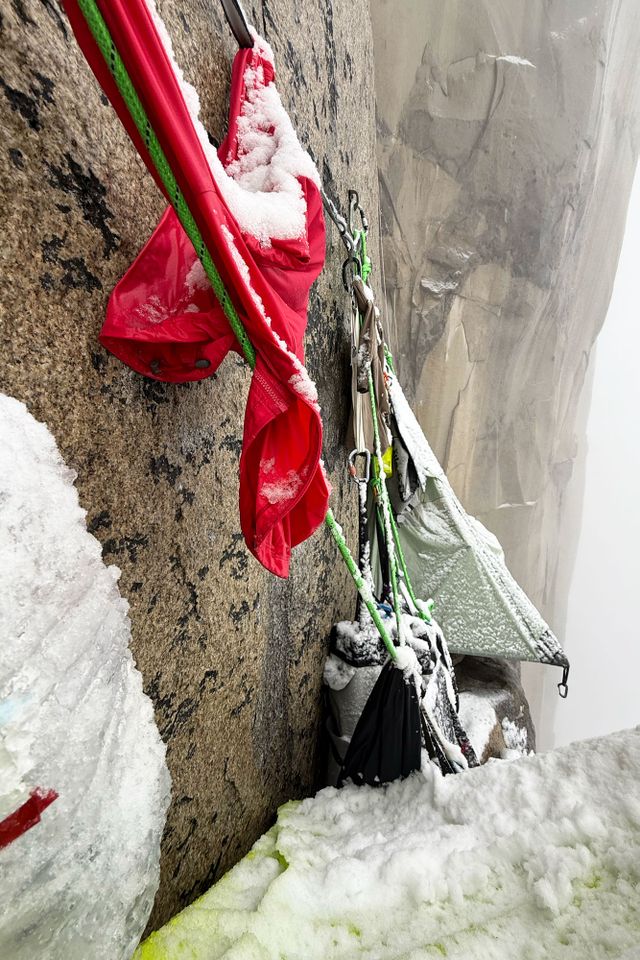
“I always joke that I love to sleep in a luxury hotel, but I also can spend 23 nights on a portal edge,” she shares. “One doesn’t need to cancel out the other. I like camping, but I also like nice room service. That’s what’s fun about life.”
Although she admits that carving her own path and showing up authentically “wasn’t really received openly,” she hopes it shows other women interested in climbing they don’t have to change in order to get into the sport.
“Now, hopefully more young girls who are getting involved in climbing who have whatever aspects of themselves that they bring to climbing are less suppressed or judged because of that,” she shares.
Still, DiGiulian “loves the way in which it’s brought me to just some really unique places around the world and served as this global community.”
“You travel and you immediately have this network of people that are really passionate about the same sport that you are passionate about,” she explains. “It’s this lens to see the world and this connective tissue that really connects a lot of climbers globally together.”
Sasha DiGiulian’s climbing equipmentCredit: Courtesy of Sasha DiGiulian
DiGiulian has been to more than 50 countries and says the sport has “served as this global teacher and connective point to meeting new communities and seeing new places.”
“That might be one of my favorite aspects of the sport as well as just a personal challenge. When you’re climbing something, it’s really up to you. You’re in control of your body, your progression; it’s very individual,” she tells PEOPLE. “If you’re working with a climbing partner, if you’re on a multi-pitch or big wall climb, it’s you and your climbing partner operating as a team. You’re really thinking about the collective nature of a cliff face; it’s a jigsaw puzzle where you have to put together all of these different little pieces, and it’s very mind-body. There’s a physical aspect to it, but it’s also very mental.”
Not only is climbing a great “social form of exercise,” but it’s also “a really good full-body workout.”
“You’re using your upper body and your core and your legs. It’s very mind-activating, so you don’t necessarily notice how much your body’s working sometimes because your mind is solving these puzzles,” DiGiulian shares.
Although she’s been climbing for over two decades, she notes that “each individual climb” brings something new.
“They each represent a new set of challenges, mostly on the physical level of navigating where I can push my body to be able to do a climb that I don’t know if I’m capable of doing,” she shares. “There are so many challenging climbs around the world.”
on People
Source: “AOL Entertainment”
