


Forget the AI backlash. America is still on the road to big tech feudalism
Forget the AI backlash. America is still on the road to big tech feudalism

Joel KotkinThu, November 19, 2026 at 12:00 PM UTC
0
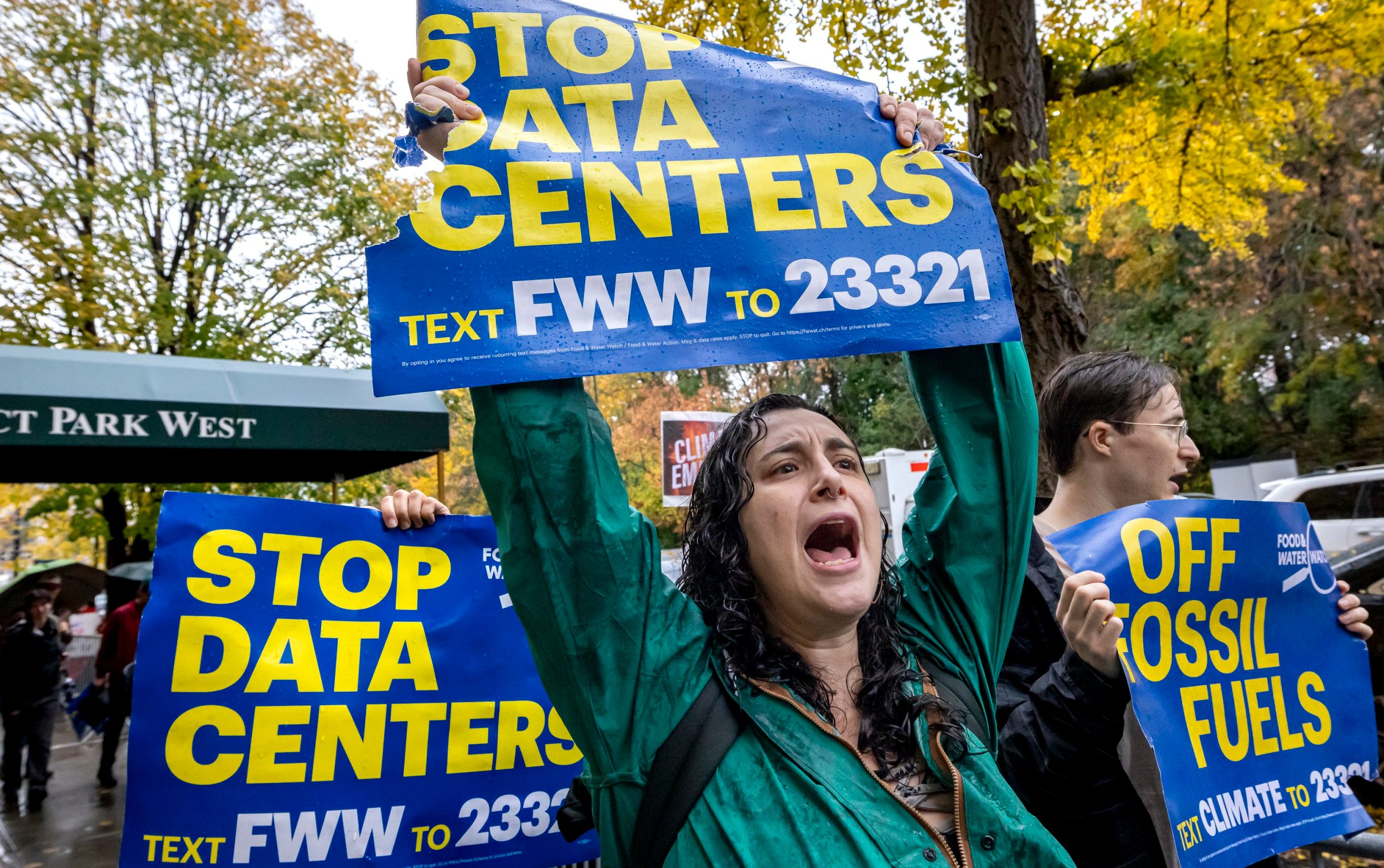
‘Stop the AI Race’ protesters gather outside OpenAI headquarters, Nov 14 - Heather Diehl/Getty Images
America now has three parties: the Democrats, Republicans and Artificial Intelligence. And in the midterm elections, AI was as big a loser as the GOP.
The Democrats have long been supported by the tech industry. But now many Democrats have adopted a quasi-Luddite position on AI.
Some embrace a moratorium on development while the leader of the insurgent Left, Bernie Sanders, wants an American sovereign wealth fund to take a 50 per cent share in AI firms. The Guardian has proclaimed that “anti-AI populism is the future of American politics”.
Certainly, attacking data centres proved a good strategy. They are unpopular not only in deep blue states but across the United States, including among Republicans. As energy analyst Robert Bryce points out, since 2024 rejections of new data centres have risen from nine in 2024 to 48 last year, and then 70 in the first quarter of this year alone.
For Republicans, the anti-tech drive could be more immediately divisive. Populist Republicans are unenthusiastic about the AI buildout. But the big-money faction – led by the likes of Elon Musk – remains an important constituency. Data centres do provide a lot of blue-collar jobs, which supposedly appeal to a key part of the Maga coalition. But Newsweek’s AI Policy Scorecard shows that 83 per cent of the House Republicans who lost their re-election bids were also AI boosters.
This represents something of a sea change. Pew notes that the proportion of Americans who see AI as mostly positive has shrunk since 2021 from 18 to 9 per cent, while those worried about its effects have jumped from 37 per cent to 52 per cent. The percentage of Americans expressing “a great deal” or even “quite a lot” of confidence in big tech has plummeted from 32 per cent in 2020 to 20 per cent this year.
Data centre rejections have surged eightfold since 2024 - Michael Nigro/Pacific Press
To be sure the tech oligarchs will try, as the Beatles once put it, to “buy you love”. In their successful record-breaking $350m campaign against a proposed billionaire tax in California, they also won the support of some powerful unions as well as the current and next governor.
But the immediate future for the oligarchs does not look too bright. The Public Policy Institute of California found 75 per cent of surveyed young adults aged 18-34 had intended to support the billionaire tax.
Much of this hostility is understandable. Silicon Valley has changed since the 1980s, when engineers talked about making life better for most people. Today the Valley elite, notably in AI, brazenly promotes a sociopathic vision of the future that few sane people would embrace.
Advertisement
Many members of that elite, prominent tech innovator Rony Abovitz told me, are simply disconnected from normal humanity. Others appear flippant about the consequences of AI. Anthropic’s Dario Amodei appears to see his company’s beloved AI agents as a substitute for humans, writing that it “cannot possibly be more than a few years before AI is better than humans at essentially everything”.
Humans, notes another top Anthropic executive, may still find work in “grounds maintenance, like food and serving, personal care, personal service”. That is before robots are set to work to provide these services, too. Most hoi polloi would be reduced to a serf-like status, subsidised by the state to keep from destitution.
In this world, Abovitz notes, we would be ruled by geeky Übermenschen who control the algorithms directing human life. Some even embrace the notion that their “agents” should be treated as something equal or greater than humanity. This is apparently too much even for Elon Musk, but when the SpaceX supremo raised concerns about AI and the human future, Larry Page, the co-founder of Google, reportedly accused him of being a “speciesist”.
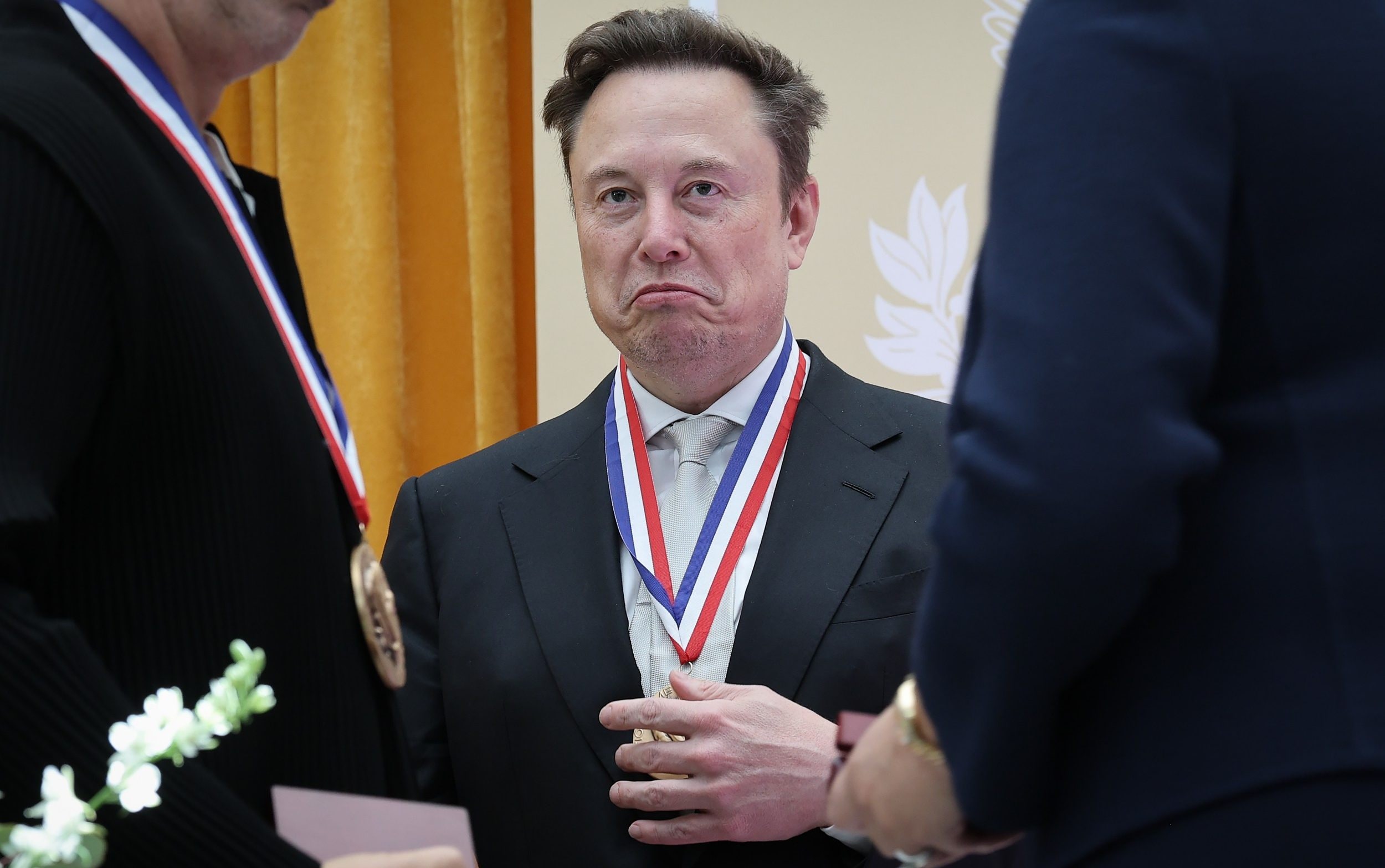
Elon Musk and Larry Page drifted over disagreements on AI - Win McNamee/Getty Images
We can see outlines of this dystopia today in Silicon Valley. Even as profits for the big tech firms rose towards record levels, tech workers suffered waves of massive layoffs. It’s not much better in the Puget Sound, where Microsoft has offered buyouts to 60,000 workers, a quarter of its global workforce.
Once a proud exemplar of America’s egalitarian “democratic capitalism”, Silicon Valley has become increasingly unequal, according to a recent report by Joint Venture Silicon Valley. It is now one of the most unequal places in North America, with the wealthiest 10 per cent controlling 75 per cent of the wealth, while the bottom half of the population owns less than 1 per cent.
Yet, despite the industry’s inegalitarian character, the bulk of the tech elite remains loyal to the very Democratic Party that now holds them in contempt. Almost all the contributions from employees at companies like Meta, Google and Amazon go to the Democrats.
Indeed, tech’s much-heralded shift Right-ward has been overstated. Ultimately the AI party will likely find its home in the “moderate” wing of the Democratic Party. Indeed, if anyone to the Right of Alexandria Ocasio-Cortez is the Democrats’ next presidential nominee, we will likely see a repeat of what happened under the Biden administration: collusion between big tech and the bureaucracy. Society’s defence against AI will come not from public agencies, but self-appointed experts, as Anthropic’s Dario Amodei among others suggest.
Even as many Democrats see tech anxiety as their meal ticket, they need the tech oligarchy to finance their campaigns, boost productivity and fill the tax coffers. Many AI models, moreover, already seem to have a friendly Left-leaning bias that helps Democrats. Collusion with Washington could also empower the AI-empowered oligopoly to kill unwanted competition employing what one writer described as “algorithmic firing squads”.
The losers here will be the public, upstart firms, and innovation. A victory of the AI party, merged with the Democrats, will write just another chapter in our road to neo-feudalism.
Source: “AOL Money”
